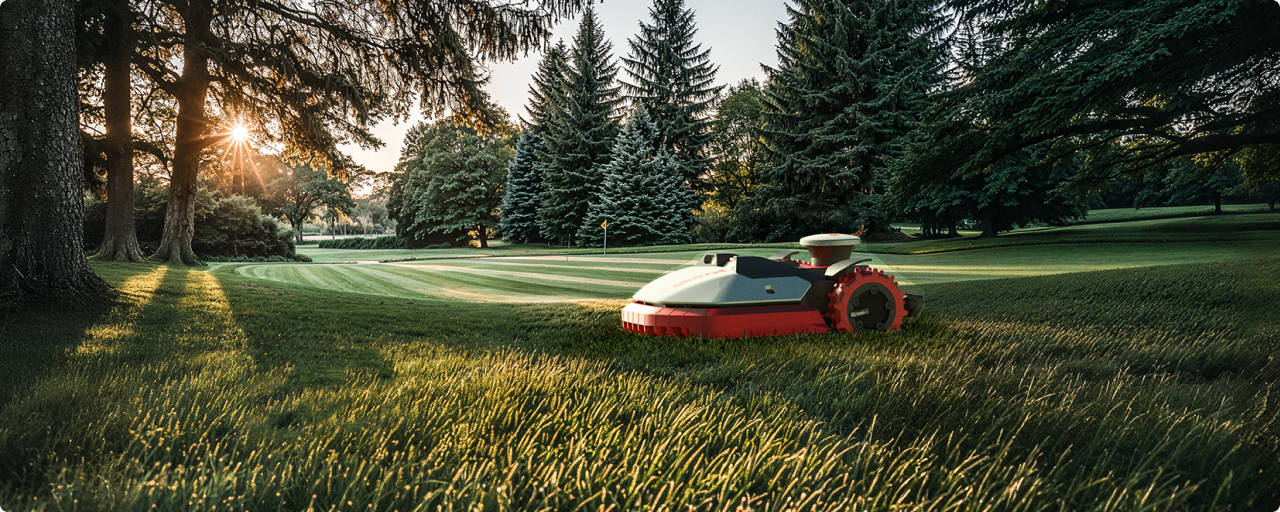


Robotic mower labor savings come from reducing the hours grounds crews spend mowing repetitive turf areas, including roughs, driving ranges, and practice facilities. Those hours can then be redirected toward trimming, edging, bunker maintenance, irrigation checks, and other essential course responsibilities. The actual savings depend on your property, current mowing schedule, and the level of oversight required.
For golf course superintendents managing demanding schedules with limited staff, the opportunity isn’t about eliminating positions. It’s about giving experienced grounds professionals more time to focus on the details that influence turf quality, playability, and the golfer experience.
Which Mowing Jobs Can a Robotic Mower Take Off Your Crew’s Schedule?
Golf courses have acres of maintained turf that require attention throughout the growing season. While some areas demand specialized equipment and direct operator control, others involve repetitive mowing routes that consume valuable crew hours.
That’s where Kress robotic mowers for golf courses can make a difference. A robotic lawn mower for large areas can maintain designated turf zones on a recurring schedule without requiring an operator to complete every pass.
Common applications include:
- Primary and Secondary Roughs: Maintain consistent grass heights across designated rough areas without assigning operators to the same routes repeatedly.
- Driving Ranges: Keep range turf maintained around scheduled practice activities, ball collection, and other facility operations.
- Practice Facilities: Automate mowing around practice areas and surrounding turf where cutting requirements are compatible with the selected mower.
- Surrounding Acreage: Maintain clubhouse lawns, open green spaces, and out-of-play areas that still require regular attention.
- Scheduled Cutting Cycles: Program recurring mowing during approved low-traffic periods, including overnight hours where site conditions and local regulations permit.
Rather than waiting for a crew member to become available, robotic equipment can follow an established maintenance schedule. Frequent cutting also helps maintain a consistent appearance while reducing the amount of grass removed during each cycle.
For a closer look at turf requirements, cutting precision, and course applications, read our golf course robot mower guide.
How Long Does It Take a Robotic Mower to Cut an Acre?
The Kress KR238G MasterSeries is rated to cover up to five acres overnight and up to 20 acres over a 48-hour mowing cycle. These figures describe the manufacturer’s rated coverage, not a fixed number of minutes required to complete one acre.
Unlike conventional mowing, which often involves completing an entire area in a single crew shift, robotic equipment maintains turf through recurring cutting cycles. The mower follows its programmed route, operates within designated zones, and returns for charging as needed.
This approach changes how grounds managers think about mowing productivity. Instead of asking how quickly an operator can finish a particular area, the focus shifts to whether the equipment can maintain the required turf conditions throughout the week.
Actual coverage depends on several factors:
- Grass growth rate and cutting frequency
- Terrain, slopes, and obstacles
- Charging requirements
- Weather and turf moisture
- Mowing-zone layout and operating windows
A Kress robotic mower using Kress RTKn satellite guidance can follow planned mowing routes without buried boundary wires, making it easier to manage recurring cutting areas. For golf facilities, autonomous mowing offers an opportunity to maintain turf consistently while reducing the hours employees spend operating equipment.
How Do You Estimate Robotic Mower Labor Savings on Your Course?
Calculating robotic mower labor savings starts with documenting how your crew currently spends its time. Before introducing robotic equipment, track the weekly hours assigned to each mowing area and identify which routes are suitable for automation. Separating these responsibilities makes it easier to identify where automation could deliver the greatest operational benefit.
Sample Weekly Grounds Crew Labor Worksheet
The following example illustrates how a superintendent might evaluate the hours available for reassignment after introducing robotic mowing.
| Mowing task | Weekly crew hours now | Hours robot takes over | Hours freed |
| Primary and secondary roughs | 12 | 9 | 9 |
| Driving range turf | 4 | 3 | 3 |
| Practice facility surroundings | 3 | 2 | 2 |
| Clubhouse and open turf | 3 | 2 | 2 |
| Total | 22 | 16 | 16 |
These figures are not Green Industries customer performance data and do not account for every robotic mower maintenance or oversight task.
In this example, robotic mowing takes over 16 of the 22 weekly hours previously assigned to these routes. That creates an opportunity to reassign crew time to other responsibilities, although equipment inspections, cleaning, and monitoring will offset some of the gross savings.
Turn Your Current Schedule Into a Practical Estimate
Start by reviewing your crew’s mowing logs over several weeks. Identify the areas that require the most repetitive work, including travel and equipment handling time where applicable. Next, determine which routes robotic equipment can reasonably maintain. Consider terrain, cutting height requirements, operating windows, and obstacles that may affect coverage.
Finally, subtract the employee time still needed to monitor, inspect, and maintain the robotic equipment. This gives you a more useful estimate of the net labor hours available for reassignment.
Once you understand the labor impact, you can evaluate the financial side separately. Our guide to commercial robotic lawn mower price explores equipment expenses and broader ownership considerations.
Can a Robotic Mower Cut Maintenance Hours Too?
Yes, robotic mowers can reduce certain equipment maintenance tasks, although they introduce different service requirements that grounds managers need to account for.
Traditional gas-powered mowing equipment requires engine oil changes, fuel system maintenance, air filter replacements, and other routine engine service. Battery-powered robotic mowers eliminate many of these responsibilities, giving equipment technicians fewer engine-related tasks to manage. However, robotic equipment still requires regular attention.
Less Engine Maintenance, More Routine Inspections
Typical robotic mower maintenance includes:
- Blade Replacement: Inspecting and replacing cutting blades to maintain consistent turf quality.
- Equipment Cleaning: Removing accumulated grass, dirt, and debris from the cutting system and mower body.
- Battery and Charging Checks: Inspecting charging connections and monitoring battery performance.
- Sensor Inspections: Keeping cameras and other navigation components clean and functioning properly.
- Software and System Checks: Reviewing equipment alerts, updates, and operating performance.
The goal isn’t to eliminate maintenance but to simplify certain responsibilities and reduce the amount of time employees spend servicing conventional engines. For golf courses that also maintain public-facing facilities or municipal properties, a commercial robot mower may offer similar operational advantages across other maintained turf areas.
Green Industries also provides local service through its in-house team, helping grounds managers address equipment issues without relying entirely on their own maintenance staff.
What Are the Downsides of a Robotic Mower for a Grounds Crew?
Robotic mowing can take repetitive work off your team’s schedule, but it isn’t a complete substitute for traditional grounds maintenance. Understanding the limitations helps superintendents set realistic expectations and develop a maintenance program that works.
Specialized Turf Maintenance Still Requires Your Crew
Robotic mowers cannot perform every task needed to keep a golf course in excellent condition.
Crews will still need to handle trimming around obstacles, edging, bunker raking, irrigation repairs, and cleanup after storms. Greens maintenance also requires particular attention. Conventional Kress RTKn models are not intended to replace specialized putting-green equipment, where extremely low cutting heights and precise surface management are essential.
Setup and Oversight Remain Important
Before equipment begins operating, the property must be mapped and mowing zones established. Charging stations, no-go areas, obstacles, and operating schedules all require planning.
Terrain also affects suitability. Many Kress RTKn models have maximum slope ratings of 40%, but actual performance depends on the model, boundary conditions, traction, and turf moisture. Grounds teams must also account for weather, fallen branches, debris, and changing course conditions. Heavy morning dew or saturated turf may require adjustments to avoid traction problems or unnecessary turf stress.
These limitations don’t eliminate the labor advantages. They help identify which tasks are best suited for automation and which should remain with experienced maintenance personnel.
Are Robot Lawn Mowers Worth It for Golf Courses?
For commercial golf operations asking are robot lawn mowers worth it, the greatest benefits typically come from automating open turf areas that require the same mowing work week after week.
The more repetitive mowing your grounds crew performs, the greater the opportunity to redirect those hours toward work that requires specialized attention. Consider the earlier worksheet.
If robotic equipment takes over 16 weekly hours of routine mowing, that creates additional capacity for bunker preparation, irrigation management, detailed trimming, and other course improvements. The actual benefit depends on how much oversight remains and whether the equipment consistently maintains the required turf conditions.
For golf superintendents, the decision should come down to three questions: Can the equipment maintain your turf standards? How many crew hours can realistically be reassigned? And will those hours help your team accomplish more throughout the growing season?
If the answers support your maintenance goals, robotic mowing can become a valuable part of your long-term grounds management strategy.
Get a Labor Estimate for Your Course
Your crew’s time is valuable. Green Industries can help you determine where robotic mowing fits into your maintenance program and what robotic mower labor savings may look like across your property.
Our team evaluates your course, maps suitable turf areas, establishes mowing zones and no-go areas, and plans routes and schedules around your maintenance needs. We’ll also help estimate the routine mowing hours Kress equipment could take over, so you can make an informed decision.
See how much more your grounds crew could accomplish with the right equipment and support.
Frequently Asked Questions About Robotic Mower Labor Savings
How much labor can a robotic mower save a golf course?
Robotic mower labor savings depend on the acreage suitable for automation, current mowing frequency, and the amount of employee oversight required. Golf courses can estimate potential savings by tracking weekly mowing hours, identifying suitable routes, and subtracting the time still required for equipment inspections and maintenance.
What golf course maintenance tasks can robotic mowers handle?
Depending on the model, robotic mowers can maintain roughs, driving range turf, practice facility surroundings, and other open turf areas. Certain specialized models can also maintain fairways. Grounds crews remain responsible for tasks such as bunker preparation, trimming, irrigation repairs, and detailed course maintenance.
Do robotic mowers eliminate the need for grounds maintenance employees?
No. Robotic mowers automate repetitive cutting tasks but still require setup, inspections, blade replacement, cleaning, and occasional intervention. Their primary advantage is allowing grounds crews to dedicate more time to specialized maintenance responsibilities.
Can robotic mowers maintain golf course turf overnight?
Yes, compatible robotic mowers can operate overnight when course conditions and local regulations permit. For example, Kress rates its KR238G MasterSeries for up to five acres of overnight coverage. Actual performance depends on turf conditions, terrain, and operating schedules.
How should a golf superintendent measure labor savings?
Start by recording the weekly employee hours spent on each mowing route. Identify the tasks suitable for automation, estimate how much operator time robotic equipment can take over, and subtract the remaining monitoring and maintenance requirements. Compare the results over several weeks to evaluate actual labor savings.